
Specialty Gas Supply
Fueling progress with on-site LNG transport.
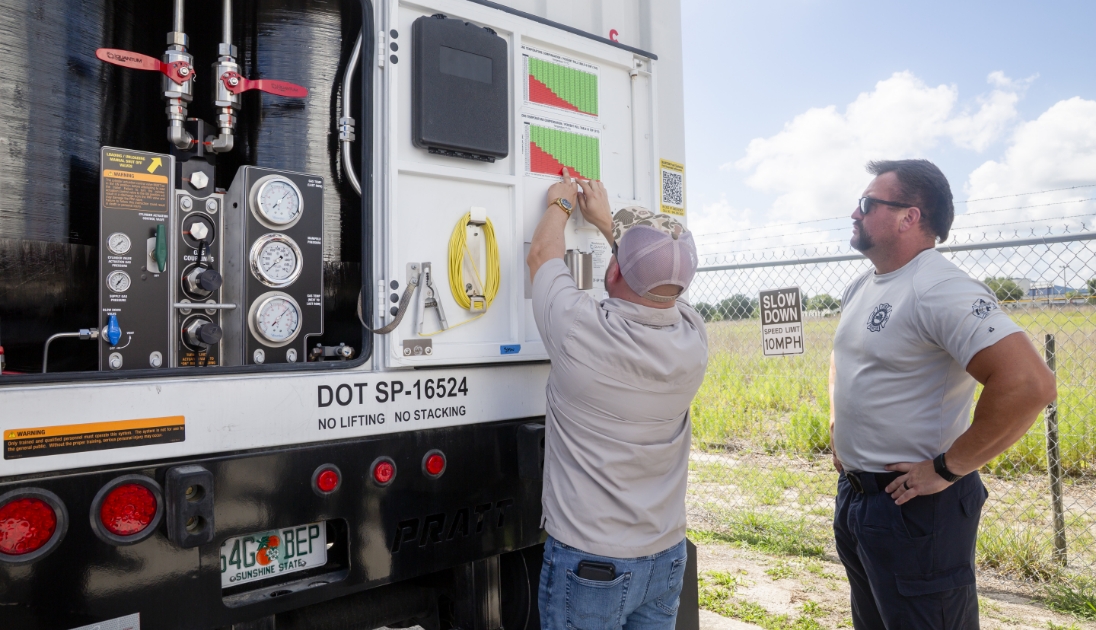
Roughly one-third of primary energy consumption in the U.S. is from natural gas, according to the U.S. Energy Information Administration. While most natural gas is delivered in a gaseous state via underground pipelines, there has been a rising demand for natural gas in its liquefied form (LNG), especially for transport and trade. Liquefying natural gas allows operations to move natural gas long distances where pipeline transport is not feasible. No matter the destination — ports, train stations or utility companies — Marlin Gas Services gets LNG to you safely and efficiently.
Benefits of LNG
Transported at Higher Volumes
In its liquid state, natural gas is 600 times smaller than in its gaseous state.
Abundant Supply
The U.S. is the top producer of natural gas and one of the largest suppliers of LNG.
Reduced Emissions
Choosing LNG over traditional fuel significantly cuts carbon dioxide and greenhouse gas emissions.
LNG Applications
Cruise and Cargo Ships
Marlin Gas Services keeps ships and port operations fueled with mobile LNG solutions, helping reduce emissions and meet sustainable energy goals.

Trains
Rail operators count on Marlin Gas Services for reliable LNG deliveries to yards and fueling stations, supporting a shift to lower-emission locomotives.
Utilities
Utilities use Marlin Gas Services-distributed LNG supply to manage peak demand, maintain reliability and serve areas beyond pipeline reach.

Space Programs
Marlin Gas Services can help ensure consistent, high-flow LNG supply for rocket launches, testing and facilities where uninterrupted fuel access is vital.